Description
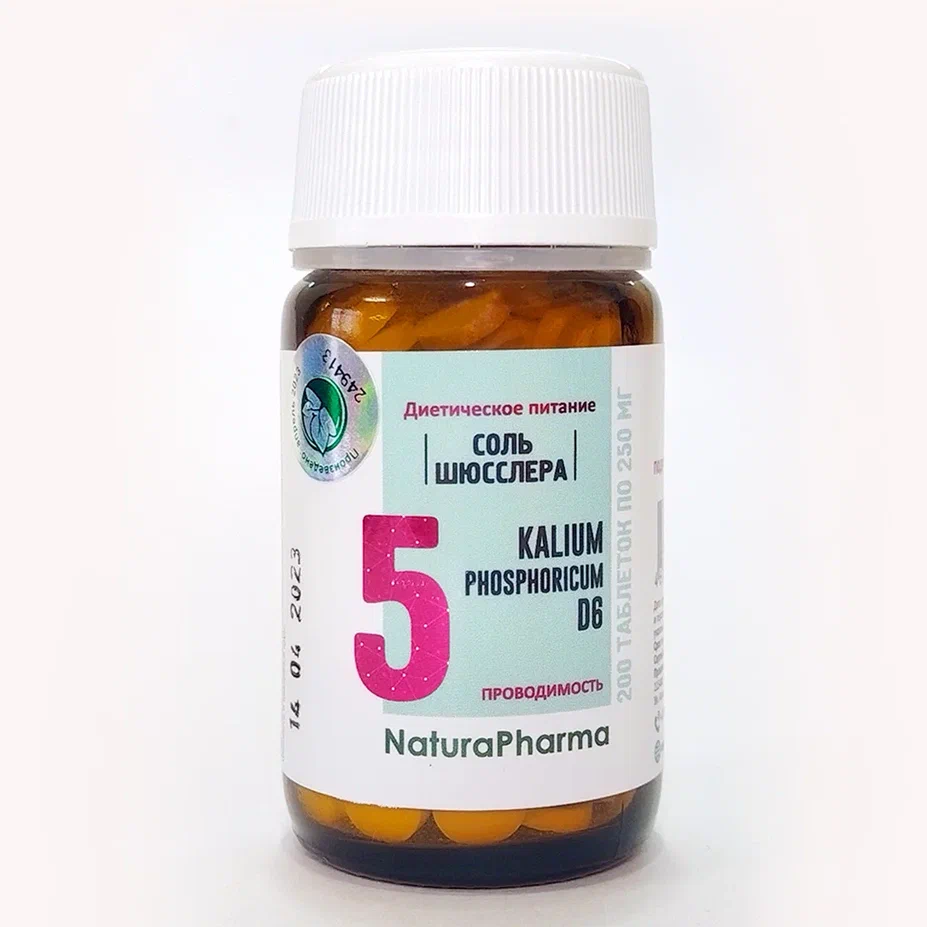
Schussler’s salt No. 5span>
Kalium Phosphoricum D6 (Kali Phos) Potassium Phosphate
Tokey word: nervous system, fever, adynamia, destruction
Kinship: muscle and nerve tissue
The composition of the trituration: Potassium phosphate, pharmacopoeial lactose.
Tablet composition: Potassium phosphate, pharmacopoeial lactose, magnesium stearate, aerosil A.
Form of release:
a bottle of dark glass 200 tablets
dark glass bottle of 80 tablets
a dark glass bottle with a measuring spoon of 20 g trituration (equivalent to 80 tablets)
In the body, all processes of oxidation, gas exchange during respiration, and fat oxidation occur in the presence of alkaloids, one of which is Potassium Phosphate. Potassium phosphate is a modulator of the central and peripheral nervous system. It is indispensable for the formation of red blood cells and muscle tissue. The deficiency leads to overexertion of these organs, which can be accompanied by mental disorders, loss of strength, anxiety, sadness, insomnia, phobias, memory loss and concentration, as well as neurovegetative and muscular disorders, including paralysis and degeneration of nerve trunks.
Due to its ability to influence the state of the autonomic nervous system, the drug is widely used in cases of febrile fever, with a temperature above 39 ° C, with the risk of seizures.
IT IS NOT A DIETARY SUPPLEMENT
IT IS NOT A MEDICINAL PRODUCT
Indications:
- Degenerative diseases of the nervous system
- Neurological symptoms, pain in any organ
- Neurasthenia, depression, melancholia, phobias, insomnia
- Cognitive impairment
- Restlessness with palpitations
- Atrophic diseases in the elderly
- Violation of innervation
- Unpleasant, intense body odor during illness
- Neuromuscular diseases
- Fever
Special instructions: low potencies work better.
Dosing
The dose and frequency of administration depending on age are shown in the tables.
|
Chronic situations |
Acute situation |
| Age |
Dose |
Reception frequency |
Dose |
Reception frequency |
| Infants |
1 tab each. |
1-2 times a day |
By ½ tab. |
Every 30-60 minutes |
| Children 2-8 years old |
1 tab each. |
2-3 times a day |
1 tab each. |
Every 15-30 minutes |
| Children 8-14 years old |
1 tab each. |
3 times a day |
1 tab each. |
Every 15-30 minutes |
| Teenagers |
2 tables each. |
3 times a day |
1 tab each. |
Every 5-15 minutes |
| Adults |
2 tables each. |
3 times a day |
1 tab each. |
Every 5-15 minutes |
*In the indicated doses, take from 30 minutes to several hours from the start of administration, but not more than a day.
Schussler’s salt No. 5span>
Several methods of taking Schussler salts are proposed:
- Tissue salts can be taken in dry form – the tablets dissolve in the mouth or directly under the tongue.
- The tablets are dissolved in a small amount of water (120-150 ml), intensively mixed. Take small sips, holding each portion in your mouth for a few seconds.
- Dissolved Schussler salts can be used as external therapy – as lotions, compresses, general and local baths, rinses.
It is recommended to take salt 20-30 minutes before meals or an hour and a half or more after eating and brushing your teeth.
For children under one year of age, salt should be dissolved in a small amount of water – about 20-30 ml, drunk with a teaspoon, pipette, drinking syringe or added to drinking water.
If two or more salts are prescribed, they can be taken simultaneously, but preferably not together. For example, take one salt in the morning and another in the evening. If three salts are prescribed, break them up separately: morning, lunch, evening. Another option is to alternate the use of salts for weeks or days. In any case, with prolonged use of salts, it is worth taking breaks. You can choose the following intake scheme: take salt on working days from Monday to Friday, and take a break on weekends. Or take it for three weeks every month.