



Tissue biochemical therapy was developed and researched by Dr. Schüssler, and the preparations are named after him as Schüssler salts.
Wilhelm Heinrich Schüßler was a prominent specialist in naturopathic medicine in the late 19th century. Dr. Schüßler was born on August 21, 1821, in Bad Zwischenahn, Germany. He died on March 30, 1898, near Oldenburg, where he spent many years of his life. He studied in Paris, Berlin, Giessen, and Prague and defended his doctoral dissertation in medicine. He practiced medicine mainly in Oldenburg.
Dr. Schüssler researched the effect of mineral deficiencies on the development of diseases in the human body. Year after year, he meticulously studied the role of minerals in cell biochemistry. He managed to identify 12 essential inorganic minerals, which he called "tissue salts."
In 1832, an article was published in Johann Ernst Stapf's journal Archiv für Die Homöopathische Heilkunst (Archive for Homeopathic Medicine), which suggested that such salts are "important components of the human body."
Dr. Schüssler's work was influenced by an article published in 1852 by Dutch physiologist Jacob Moleschott on the necessity of mineral salts for normal cell function.
Many years of work led Dr. Schüssler to several fundamental conclusions for that time:
- Normal cell activity depends on the optimal balance of biochemical salts contained within it.
- An imbalance of mineral salts in a cell leads to a disruption of its functions and the development of disease. Thus, disease develops at the cellular level.
- To recover and maintain health, it is necessary to eliminate the imbalance of mineral salts directly in the cell.

The main problem was that the use of the minerals in the 12 salts studied did not lead to any improvement in condition for the simple reason that most basic mineral salts are insoluble and cannot be delivered inside the cell.
It was necessary not only to identify the interrelationships between mineral deficiencies, but also to develop technologies that would allow these deficiencies to be corrected.
Dr. Schüssler sought help from his friend, Dr. Wilmar Schwabe, a scientist who ran a manufacturing pharmacy and specialized in the production of homeopathic remedies.
They saw their main task as achieving the solubility of salts without disrupting the integrity of their structure.
The experiments of the two scientists proved successful, and a coherent system of tissue biochemical therapy was presented to the world, which has been popular in all countries for over 150 years. The year 1873 is considered to be the official introduction of Schuessler salts into clinical practice.
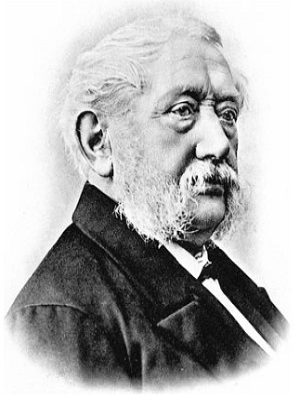
Died March 30, 1898 (aged 77)

The human body contains 12 essential mineral salts, the correct balance of which is necessary for normal cell function and good health. When diseases develop, the body uses certain salts to correct the condition, mineral reserves in the body are depleted, biochemical processes in the cell are disrupted, and tissue hypoxia develops.
Schüssler salts are mineral salts produced using a special technology involving many hours of stepwise trituration, rather than high-dose minerals that replenish deficiencies in the body. This distinguishes them from biologically active supplements containing minerals. Schüssler salts act as “keys” to the body's cells, enabling the body to independently absorb and process the substances it needs. Schüssler salts are introduced into the body in microdoses—the concentration that is physiological for the body.
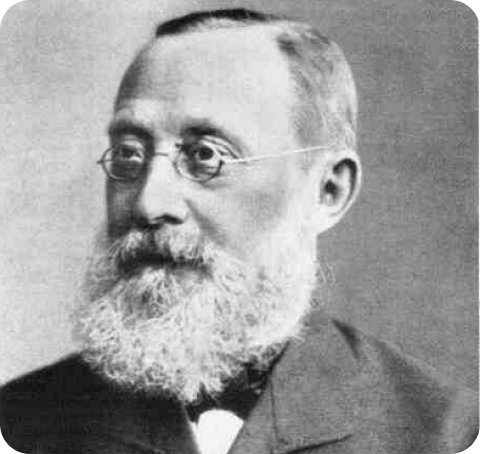
The foundations for studying the biochemistry of the body were laid by Rudolf Virchow, one of the leading scientists of his time. He proved that the human body consists of individual cells united into a single system. Each cell, in turn, consists of an infinitely small but perfectly balanced amount of substances: water, organic and inorganic substances. Inorganic substances—minerals—are present in small quantities but perform the fundamental function of catalysts for all chemical processes in the cell. Without them, life in the body would be impossible. Not only a deficiency of minerals, but also an imbalance in their ratio in the body's cells leads to functional and organic pathology.
Since mineral salts, especially insoluble ones, cannot penetrate the cell, Dr. Schüssler developed a method of trituration—the prolonged, sequential grinding of the mineral with an inert substance (lactose). By mechanically grinding the minerals to an ultra-fine state, it was possible to stretch the crystal lattice of the minerals. Such structural changes lead to a change in the properties of the mineral—it acquires solubility and the ability to penetrate cells.
Since mineral salts work inside cells, they are called “cell salts” or “tissue salts.”
The basic minerals in our body are usually found in sufficient quantities in our body and in food, but the process of absorption, balance, and optimal use of individual catalysts is often disrupted. The goal of tissue biochemical therapy is to gently, without side effects, and quickly replenish deficiencies and start metabolic processes. Schüssler salts are prescribed precisely to restore balance to the body and eliminate tissue hypoxia.
If biochemical processes proceed adequately, the body can cope with most diseases on its own. The earliest signs of salt deficiency can be easily diagnosed by minor symptoms on the skin, since when a deficiency develops, the body uses up all its available reserves—the first and safest source being skin cells. The body redistributes minerals to meet the needs of internal organs. Acne, flaking, pigmentation, wrinkles, and other defects indicate a deficiency of a certain salt. Diagnosis based on salt deficiency is called signature diagnosis and is included in the expert selection system.
Schüssler salts have been produced in Europe for 150 years. During this time, biochemical therapy has become firmly established in the practice of medical professionals.
In Russia, Schüssler salts are produced using the original technology by NaturaPharma, a specialized naturopathic manufacturing pharmacy.
For many years, we have studied in detail the technology of manufacturing biochemical salts and the work of Dr. Wilhelm Heinrich Schüssler. All salts are handmade in small batches according to the strict specifications of the author of the method.
The pharmacy has established high standards for product quality. The company received the “Best Manufacturers of Russia” award for its project to produce Schuessler salts.
Schüssler's biochemical cell salts are natural minerals of a high degree of purity that have undergone a multi-hour trituration (grinding) process. The salts are available in triturations (powders), tablets, sprays, and forms for external use. NaturaPharma produces basic salts (Nos. 1-12), additional salts (Nos. 13-27), complex salts, salts for children, combined sprays for first aid, and cosmeceuticals with Schuessler salts.
Наиболее важными клеточными солями являются хорошо известные двенадцать основных клеточных солей. Они были разработаны самим доктором Шюсслером.
The most important cellular salts are the well-known twelve basic cellular salts. They were developed by Dr. Schüssler himself.
Calcium fluoride
Calcium phosphate
Iron phosphate
Potassium chloride
Potassium phosphate
Potassium sulfate
Magnesium phosphate
Sodium chloride
Sodium phosphate
Sodium sulfate
Silicon dioxide
Calcium sulfate
Potassium arsenate
Potassium bromate
Potassium iodide
Lithium chloride
Manganese sulfate
Calcium sulfide
Copper arsenate
Aluminum potassium alum
Zinc chloride
Calcium carbonate
Sodium bicarbonate
Arsenic iodide
Gold chloride
Selenium
Potassium dichromate
Dr. Schüssler's cell salts are usually used in low concentrations. Low concentrations are usually indicated on dilution scales, as in homeopathy. Schüssler salts are labeled D6 or D12.
However, Schuessler salts are not considered a homeopathic treatment method. These markers indicate the number of stages of three-hour triturations, corresponding to 6 and 12 stages of 3 hours of trituration each. Water-soluble salts are used in potency D6, and water-insoluble salts in potency D12. These are standard concentrations. The pharmacy can prepare other potencies according to individual prescriptions.
To determine the required potency, specialists follow this rule:
- For the treatment of chronic diseases and mental symptoms, potency D12 should be used.
- D6 potencies are used to correct acute symptoms.
- Lower potencies may only be used for non-toxic salts and for local external application.
Cell salts are not comparable to dietary supplements or medical mineral preparations that people take to replenish deficiencies.
Such preparations require the additional use of Schuessler salts to ensure normal absorption and distribution throughout the body's cells. The effect of Schuessler salts can be considered more of a subtle regulatory therapy. In this regard, the main effects of Schuessler salts are dose-dependent.
General dosage recommendations are provided in the description of each salt. Additional salts are used in specific clinical situations to enhance the effects of the basic salts or to relieve narrowly specific symptoms.
In situations where long-term use of several salts is required or you find it difficult to choose the necessary salts, you can use the developed combined complexes that contain basic and additional salts in the same proportions.
In severe cases, you can supplement the intake of Schüssler salts with certain foods. According to Dr. Schussler, minerals in combination with nutrients have a mutually supportive, i.e. synergistic effect.
Several methods of receiving Schüssler salts are proposed:
- Tissue salts can be taken dry - tablets are absorbed in the mouth or directly under the tongue.
- Tablets, powder dissolve in a small amount of water (120-150 ml), mix vigorously. Drink in small sips, holding each serving for a few seconds in the mouth.
- Dissolved Schüssler salts can be used as external therapy - as lotions, compresses, general and local baths, rinses.
It is recommended to take salts in 20-30 minutes before meals or an hour and a half after meals.
For children under a year old, salt should be dissolved in a small amount of water - about 1 tablespoon, drank with a teaspoon, pipette, drinking syringe, or added to the liquid that the child usually drinks (children's tea, juice, milk, compote).
- If two or more salts are prescribed, they can be taken simultaneously, but preferably not in one dose. For example, take one salt in the morning, another in the evening. If 3 salts are prescribed, break them separately - morning, lunch, evening.
- Another option is to alternate the use of salts by week or day. In any case, with prolonged use of salts, it is worth taking breaks. You can choose such a reception scheme - on weekdays from Monday to Friday - take salt, take a break on weekends. Or take 3 weeks of each month.
Schüssler salts absorb odors easily, so they should always be stored in sealed glass jars, in dry rooms away from radiation sources (computers, TVs, refrigerators, microwaves, other gadgets).
If several tablets are needed, pour them into the lid, never pour them into a wet palm and do not take salt with wet hands, this can lead to mold due to humidity.
Many people can take Shussler salts without feeling any noticeable reactions. However, some may have temporary reactions during oral administration. This happens only because the body turns on the mechanisms of sanogenesis (recovery).
The work of the excretory organs may intensify, and you will notice several symptoms:
- increased frequency of urination and discoloration and smell of urine
- sweating will increase
- the work of the sebaceous glands is activated
- very quickly there is a feeling of lightness and release
In cases of increased acidity of the body, the following is aggravated:
- heartburn
- skin rashes may appear
- joint pain type rheumatic
- uncontrolled hunger attacks.
This does not mean that you cannot tolerate Shyussler's salt. Reactions disappear after a few days. With the production of minerals in which the body is in dire need of catalysts, intercellular fluid, blood and lymph are purified in the first place.
Sometimes you may feel symptoms as during a cold:
- runny nose
- cough
- short-term temperature rise
- change in stool.
When excreting toxic substances, they may worry about:
- swelling of the limbs and face
- itching
- headaches.
Minerals can provoke certain food addictions and specific pursuit of odors, for example, a desire for chalk or sand, salty or smoked food, a feeling of unpleasant odors in a familiar environment. This indicates specific deficits, you can diagnose the deficit using the expert program that you will find on the site.
If symptoms occur, consult a specialist or reduce the dosage of salts. All symptoms gradually disappear, the body restarts biochemical processes.


