Description
Schussler’s salt No. 10span>
Natrium Sulfuricum D6 (Nat Sulfate) Sodium Sulfate
Keyword: extracellular fluid retention, drainage
Kinship: lymph
The composition of the trituration: Sodium sulfate, pharmacopoeial lactose.
Tablet composition: Sodium sulfate, pharmacopoeial lactose, magnesium stearate, aerosil A.
Form of release:
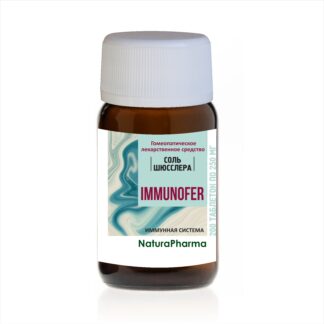
a bottle of dark glass 200 tablets
dark glass bottle of 80 tablets
a dark glass bottle with a measuring spoon of 20 g trituration (equivalent to 80 tablets)
Schussler’s salt No. 10
Biochemical salt, present in large quantities in the lymph, facilitates the elimination of toxic toxins by stimulating the function of excretory organs: kidneys, liver, gallbladder, skin, intestines. It is the opposite of Sodium Chloride in action, removes fluid from the body, while Sodium Chloride attracts fluid into the cells. Sodium sulfate regulates the polymerization of glycosaminoglycans in the connective tissue matrix, which helps to retain water near toxins, promotes their dissolution and the elimination of water-soluble toxins through the capillary bed. Activates the work of the excretory organs by reducing the sensitivity threshold of the filling volume receptors, which helps to accelerate evacuation from hollow organs, such as the gallbladder and bladder. Sodium sulfate is an active laxative that stimulates intestinal secretion and motility, and the activity of the digestive glands.
IT IS NOT A DIETARY SUPPLEMENT
IT IS NOT A MEDICINAL PRODUCT
Indications:
- All diseases of secretory and excretory organs: liver, gallbladder, kidneys, etc.
- Edema
- Cellulite
- Weeping eczema
- It is prescribed to constantly freezing patients who cannot keep warm even at night in bed.
- For easily excitable, indifferent, and depressed subjects
- Diabetes
- Gout
- Tendency to hemorrhage
- Sycotic skin growths
Special instructions: taking 5 tablets dissolved in water increases diuresis 3 times. Use only orally. With prolonged use, an anthelmintic effect may occur.
Dosing
The dose and frequency of administration depending on age are shown in the tables.
|
Chronic situations |
Acute situation |
| Age |
Dose |
Reception frequency |
Dose |
Reception frequency |
| Infants |
1 tab each. |
1-2 times a day |
By ½ tab. |
Every 30-60 minutes |
| Children 2-8 years old |
1 tab each. |
2-3 times a day |
1 tab each. |
Every 15-30 minutes |
| Children 8-14 years old |
1 tab each. |
3 times a day |
1 tab each. |
Every 15-30 minutes |
| Teenagers |
2 tables each. |
3 times a day |
1 tab each. |
Every 5-15 minutes |
| Adults |
2 tables each. |
3 times a day |
1 tab each. |
Every 5-15 minutes |
*In the indicated doses, take from 30 minutes to several hours from the start of administration, but not more than a day.
Several methods of taking Schussler salts are proposed:
- Tissue salts can be taken in dry form – the tablets dissolve in the mouth or directly under the tongue.
- The tablets are dissolved in a small amount of water (120-150 ml), intensively mixed. Take small sips, holding each portion in your mouth for a few seconds.
- Dissolved Schussler salts can be used as external therapy – as lotions, compresses, general and local baths, rinses.
It is recommended to take salt 20-30 minutes before meals or an hour and a half or more after eating and brushing your teeth.
For children under one year of age, salt should be dissolved in a small amount of water – about 20-30 ml, drunk with a teaspoon, pipette, drinking syringe or added to drinking water.
If two or more salts are prescribed, they can be taken simultaneously, but preferably not together. For example, take one salt in the morning and another in the evening. If three salts are prescribed, break them up separately: morning, lunch, evening. Another option is to alternate the use of salts for weeks or days. In any case, with prolonged use of salts, it is worth taking breaks. You can choose the following intake scheme: take salt on working days from Monday to Friday, and take a break on weekends. Or take it for three weeks every month.