Description
Schüssler’s Salt No. 1
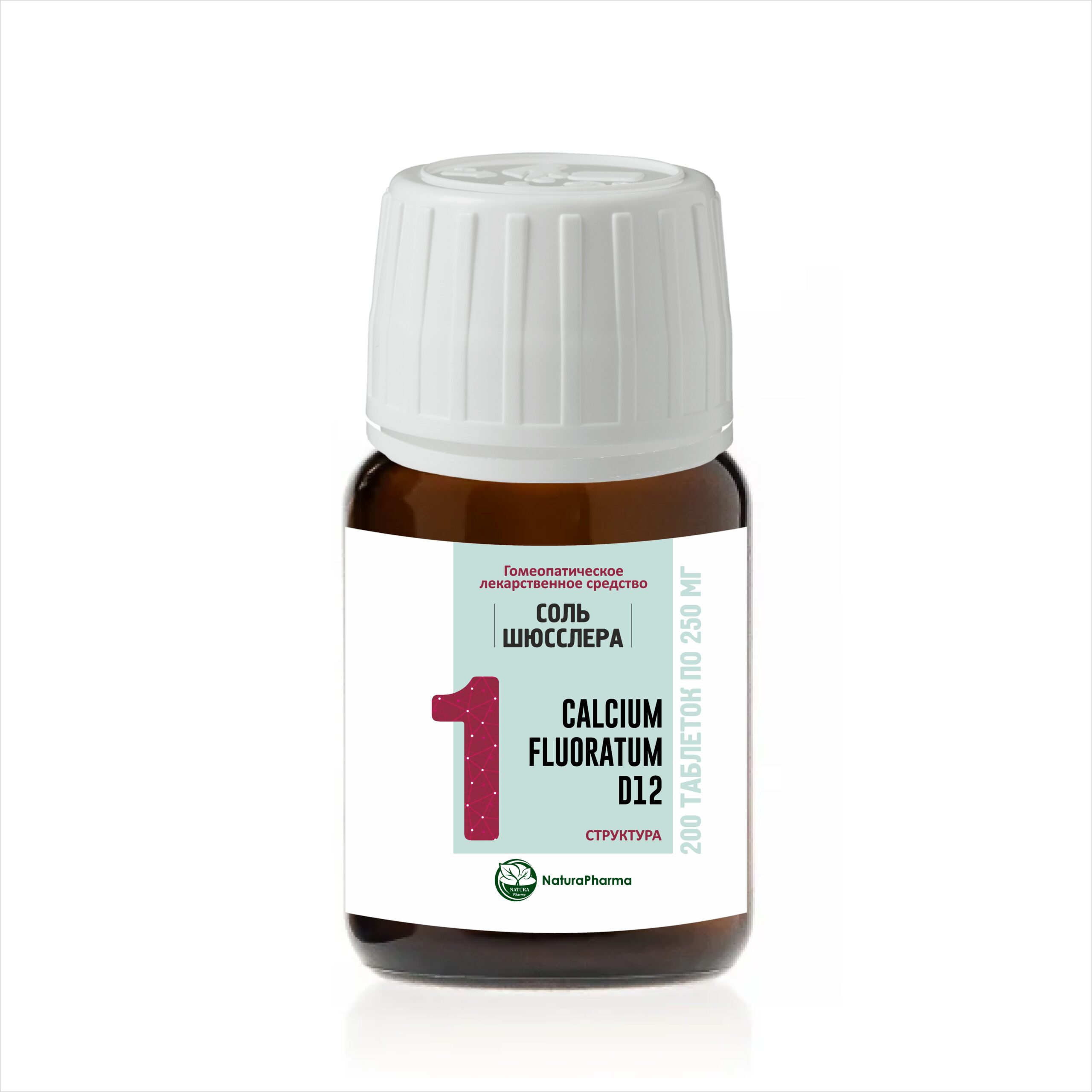
Calcium Fluoratum D12 (Calc Fluor) Calcium Fluoride
Keyword: elasticity
Affinity: bones, ligaments, muscles, tooth enamel, elastic fibers of the epidermis, vascular wall.
Trituration composition: Calcium fluoride, pharmacopoeial lactose.
Tablet composition: Calcium fluoride, pharmacopoeial lactose, magnesium stearate, aerosil A.
Dosage form:
Dark glass bottle containing 200 tablets
Dark glass bottle containing 80 tablets
Dark glass bottle with a measuring spoon, 20 g trituration (equivalent to 80 tablets)
A deficiency of calcium fluoride salts impairs the function of elastic fibers in the wall, primarily in venous and lymphatic vessels. As a result, mineral reabsorption from the connective tissue matrix is impaired, leading to tissue compaction. Calcium fluoride promotes the resorption of dense exudates.
It is prescribed to patients with dysplasia and age-related changes in connective tissue, which may manifest as urinary incontinence, uterine prolapse, prolapsed hemorrhoids, varicose veins, and postpartum weakening of the anterior abdominal wall.
Promotes regeneration after bone injuries and fractures, especially when exostoses form at the site of injury or around joints. Salt can be used for back and joint pain, where stiffness is noted at the beginning of movement, but the pain improves with movement.
In childhood, calcium fluoride is prescribed during the period of growth of baby and permanent teeth. In combination with calcium phosphate and silicon salts, it can be used to correct and prevent osteoporosis.
NOT A DIETARY SUPPLEMENT
NOT A MEDICINE
Indications:
- Loss of blood vessel elasticity: hemorrhoids, varicose veins, atherosclerosis
- Bone and dental damage: tendency to develop caries, enamel darkening, etc.
- Joint stiffness
- Childhood rickets
- Tissue and gland sclerosis
- Posterior dysfunction, lower back pain
- Premature aging
- Breast lumps
- Rectal fissures
- Osteoporosis
- Lymphatic insufficiency
- Hardening of glands and tissues
- Weakened anterior abdominal wall
- Prolapse of the uterus and other internal organs
- Exostoses
- Keratosis
- Stretch marks, striae during pregnancy, puberty
Special instructions: The drug has a slow action, therefore, it must be taken for a long time.
Contraindications:
none identified
Dosage
Doses and frequency of administration depending on age are provided in the tables.
|
Chronic situations |
Acute situations |
| Age |
Dose |
Frequency of administration |
Dose |
Frequency of administration |
| Infants |
1 tablet |
1-2 times a day |
½ tablet |
Every 30-60 minutes |
| Children 2-8 years |
1 tablet |
2-3 times a day |
1 tablet |
Every 15-30 minutes |
| Children 8-14 years |
1 tablet |
3 times a day |
1 tablet |
Every 15–30 minutes |
| Adolescents |
2 tablets |
3 times a day |
1 tablet |
Every 5–15 minutes |
| Adults |
2 tablets |
3 times a day |
1 tablet |
Every 5–15 minutes minutes |
*The indicated doses should be taken 30 minutes to several hours after the start of treatment, but not more than 24 hours.
Schüssler Salt No. 1
Several methods for taking Schüssler salts are suggested:
- Tissue salts can be taken dry – the tablets are dissolved in the mouth or directly under the tongue.
- Tablets are dissolved in a small amount of water (120–150 ml) and stirred vigorously. Take in small sips, holding each portion in the mouth for a few seconds.
- Dissolved Schuessler salts can be used externally – as lotions, compresses, general and local baths, and gargles.
It is recommended to take the salts 20-30 minutes before meals or an hour and a half or more after eating and brushing teeth.
For children under one year old, the salts should be dissolved in a small amount of water – approximately 20-30 ml – and administered with a teaspoon, pipette, syringe, or added to drinking water.
If two or more salts are prescribed, they can be taken simultaneously, but preferably not together. For example, take one salt in the morning and another in the evening. If three salts are prescribed, separate the doses: morning, lunch, and evening. Another option is to alternate the use of the salts by week or day. In any case, with long-term use of the salts, it is advisable to take breaks. You can choose this regimen: take the salts on weekdays, Monday through Friday, and take a break on weekends. Or take them for three weeks each month.